
Experiences
The Fascination with Hummingbirds
Coastal Southern California Hummingbirds: Acrobatic Backyard Jewels, Tiny Rivals, and the Sunset Rush
A warm, fact-rich look at the hummingbirds of coastal Southern California—their speed, swagger, nesting secrets, and the daily rituals that make them impossible to ignore.
In coastal Southern California, hummingbirds do not merely pass through a yard. They take possession of it. A feeder under an eave, a blooming salvia near the patio, a coral honeysuckle trained along a fence, or a flowering shrub outside a living-room window can turn an ordinary garden into a tiny, flashing theater of motion. One moment the air is still. The next, it is alive with metallic pink, copper, emerald, and violet, all attached to bodies so small they seem as though they ought to be wind-up toys rather than wild birds.
That is how the fascination starts for many people. At first, it is simple delight. Then it becomes pattern-recognition. One bird always uses the same perch. Another skims low and sneaks in under the dominant bird’s radar. A third arrives at nearly the same time every evening, like a tiny dinner guest who forgot to RSVP but always shows up anyway. Before long, the backyard is no longer just landscaping. It is territory, staging area, feeding station, bathing zone, nursery, and theater all at once.
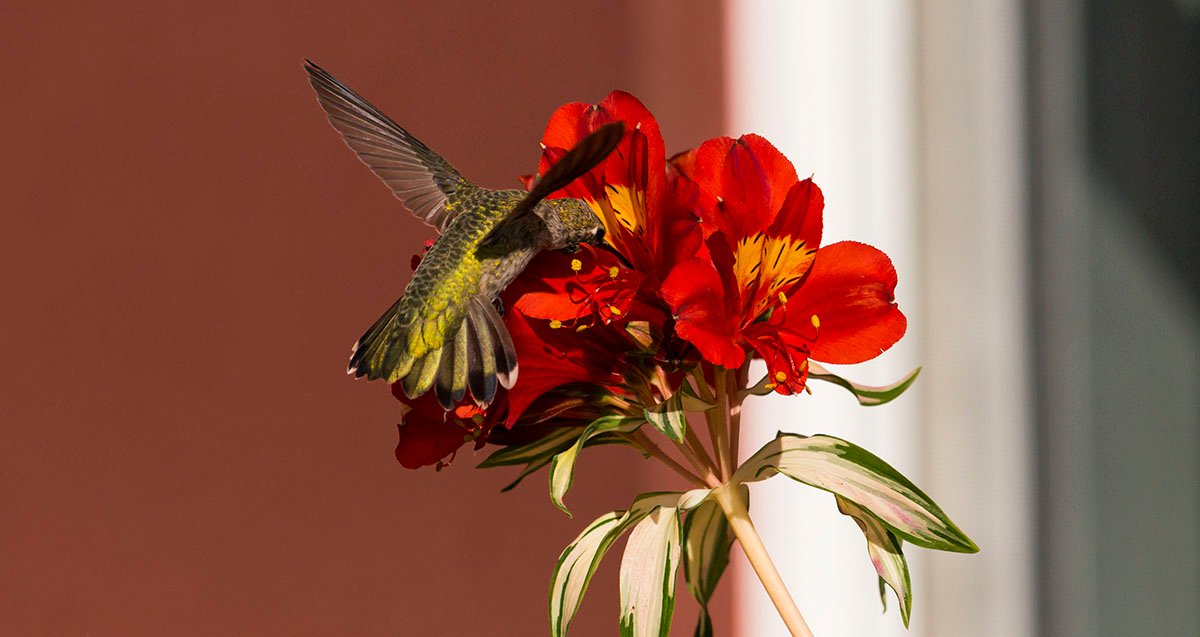
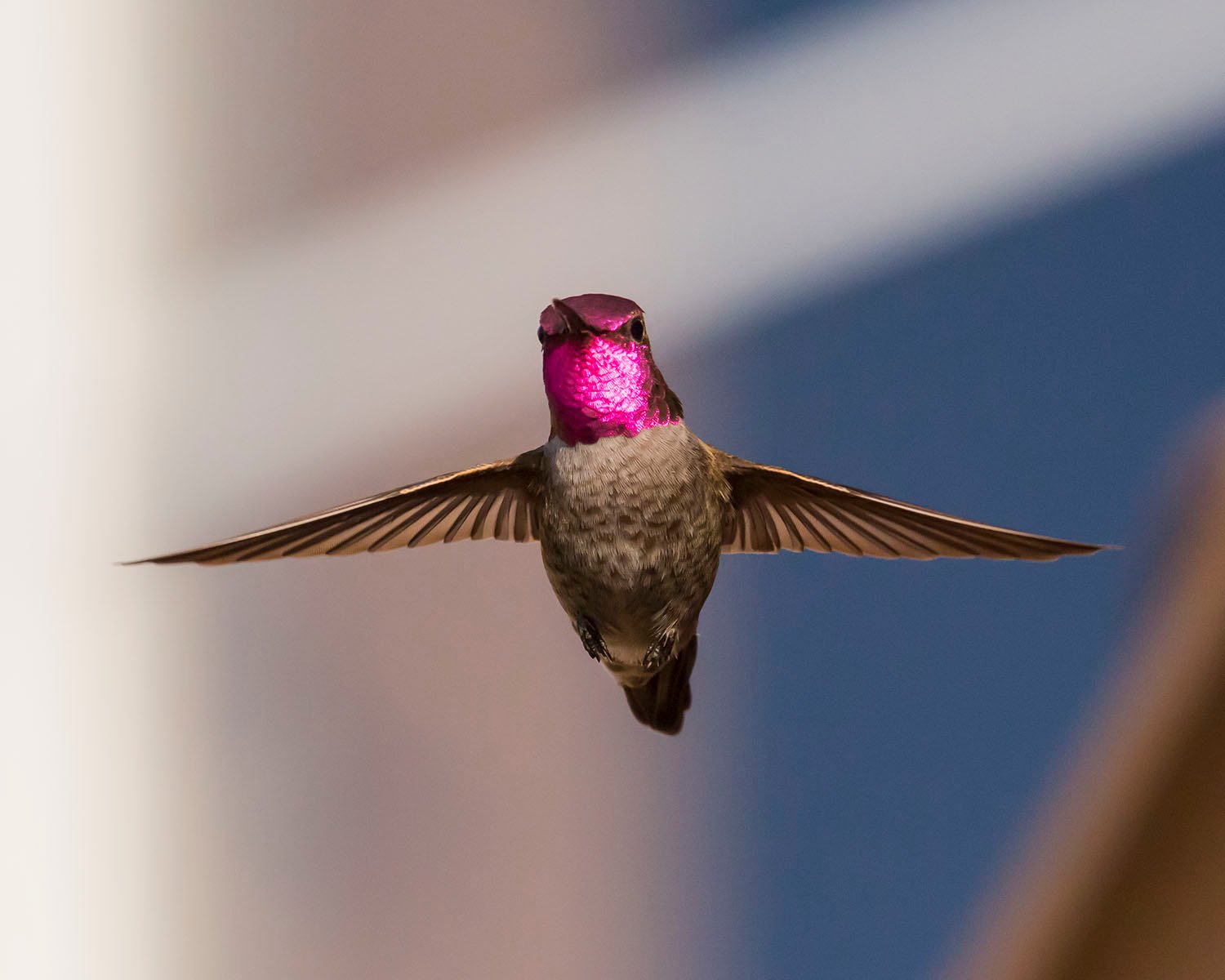
That feeling is especially strong along the Southern California coast, where hummingbirds are not rare seasonal curiosities. In much of coastal Southern California, five species are the regular cast most people are likely to encounter: Anna’s, Allen’s, Costa’s, Black-chinned, and Rufous Hummingbirds.1 Some are year-round neighbors. Others move through. All of them make an impression far larger than their size.
And size is part of the wonder. Most of our local hummingbirds weigh somewhere between about 2 and 6 grams. That means many weigh less than a nickel and still behave as though they personally own the deed to your feeder. Hummingbirds as a group can hover continuously, fly backward, briefly fly upside-down, cruise at nearly 30 miles per hour in normal flight, and exceed 45 miles per hour in courtship dives. Their hearts may race from roughly 225 beats per minute at rest to more than 1,200 beats per minute in flight, and their wings can beat about 70 times per second in direct flight and more than 200 times per second in dives.2 It is difficult not to admire an animal that looks delicate, sounds like a tiny motor, and lives like an athlete on espresso.
Hummingbirds by the numbers:
- Can weigh as little as ~2 grams (0.07 oz.)
- Consume half their weight in sugar daily
- Feed 5-8 times each hour
- Live up to 12 years, 3-5 years more commonly
- They can hover and fly backwards and momentarily upside down
- Wings beat up to 70 times per second in flight, and up to 200 times per second in dives
- Resting heartrate is 250, and can go as high as 1,260 beats per minute
- Take 250 breaths per minute
- Can fly up to 45mph in a dive
- Some can fly up to 500 miles non-stop
- Fly up to 3,000 miles from breeding to winter grounds
Why Coastal Southern California Feels Made for Hummingbirds
Coastal Southern California gives hummingbirds much of what they need: mild winters, long bloom seasons, ornamental gardens, native coastal sage scrub, canyon edges, parks, patios, and residential neighborhoods full of flowering plants. Anna’s Hummingbird occurs year-round across much of California, Allen’s is especially tied to the coast, and Costa’s is well at home in Southern California. Along the Los Angeles coast and the Channel Islands, many Allen’s Hummingbirds are year-round residents rather than migrants.1 4
That steady presence is one reason hummingbirds become such a backyard obsession here. In places with only a short hummingbird season, the birds feel like visitors. Along coastal Southern California, they can feel like neighbors—brilliant, impatient, territorial neighbors, but neighbors nonetheless.
The Coastal Southern California Species You Are Most Likely to See
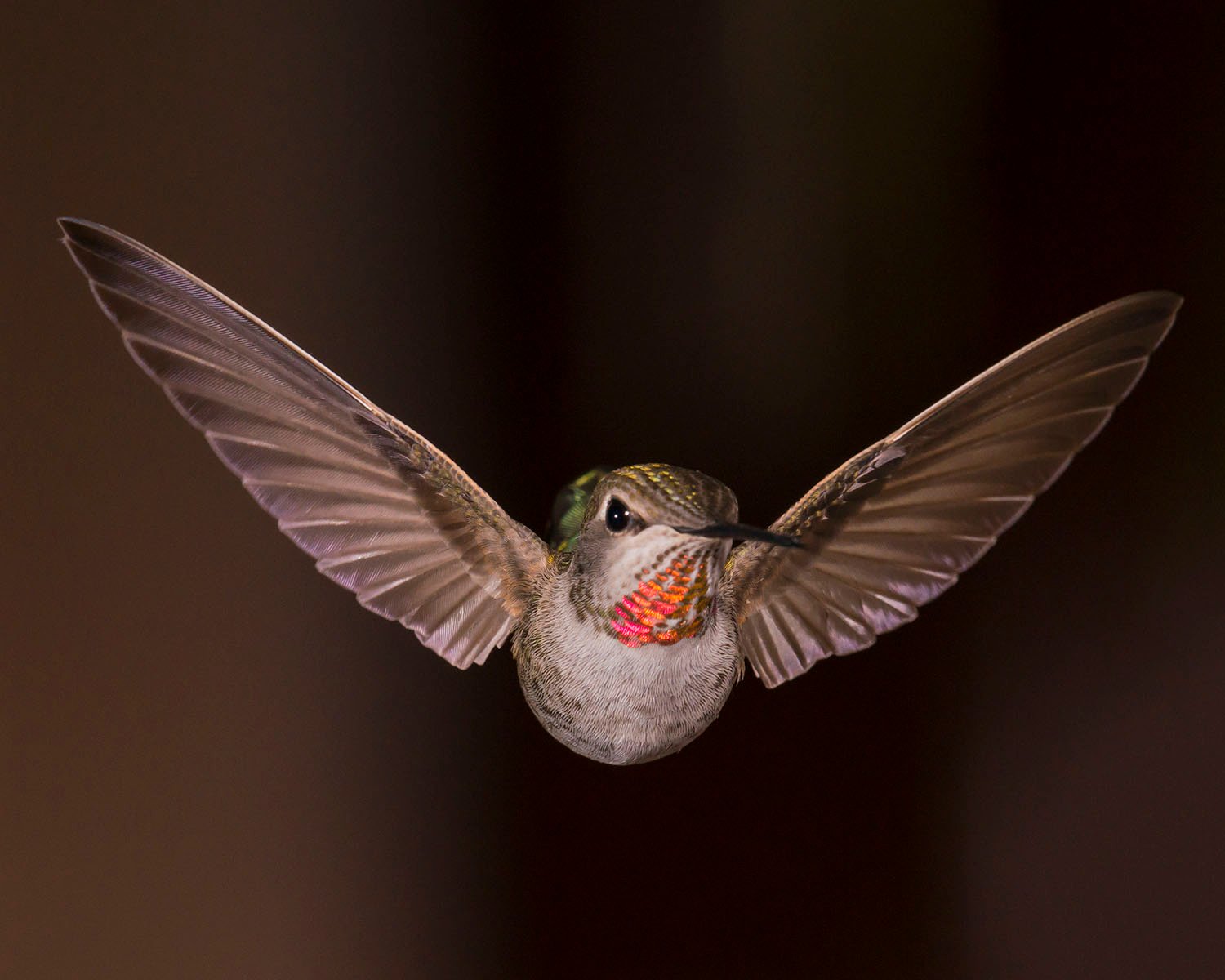
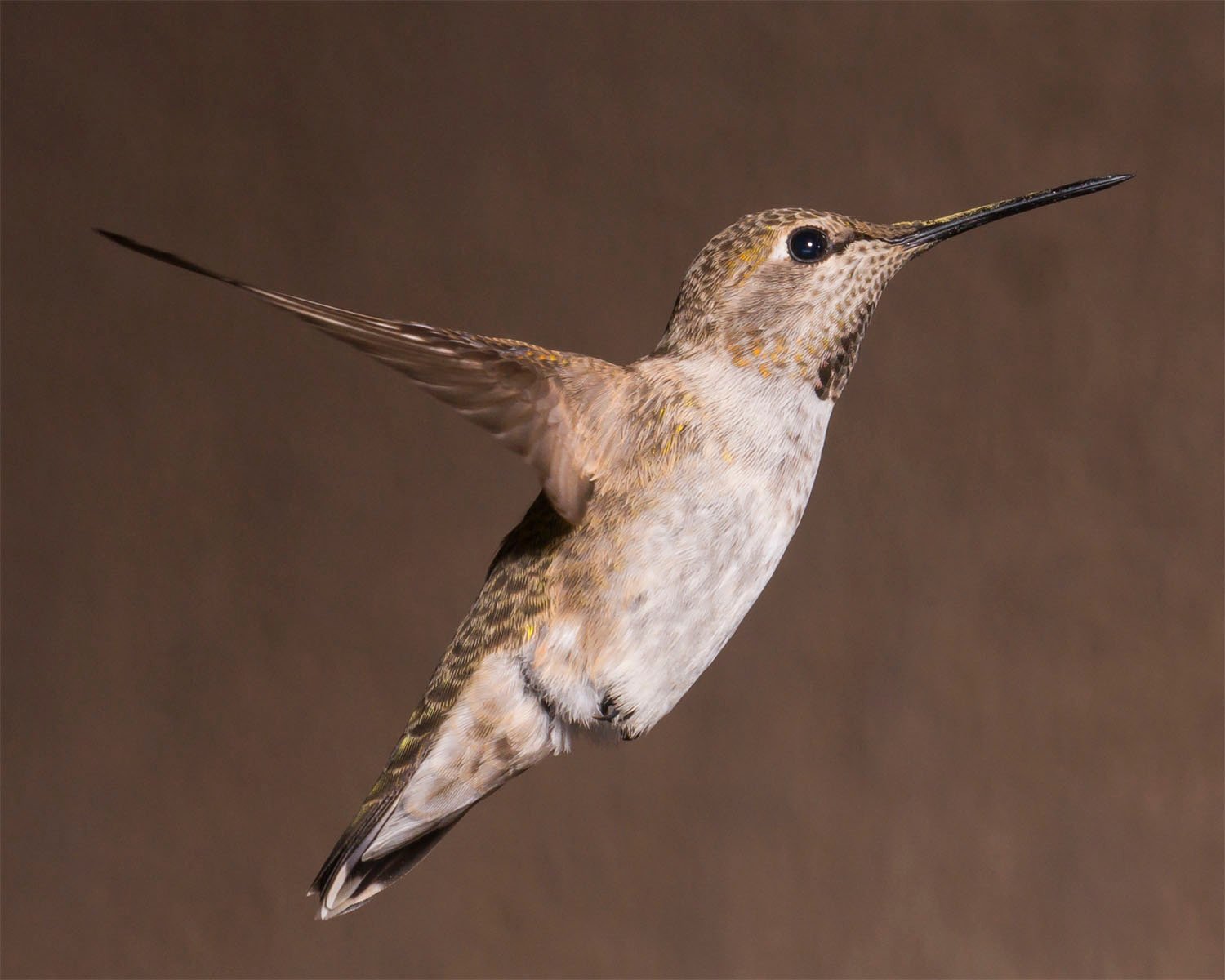
Anna’s Hummingbird is the anchor species in many coastal neighborhoods. It is about 3.9 inches long and weighs roughly 3 to 6 grams. The male’s crown and throat flash rose-pink or magenta in the sun, yet can look nearly black in shade. Anna’s is common in backyards, parks, eucalyptus groves, and coastal scrub. Males perform dramatic courtship dives from heights of roughly 130 feet, producing a sharp sound with the tail near the bottom of the plunge.3
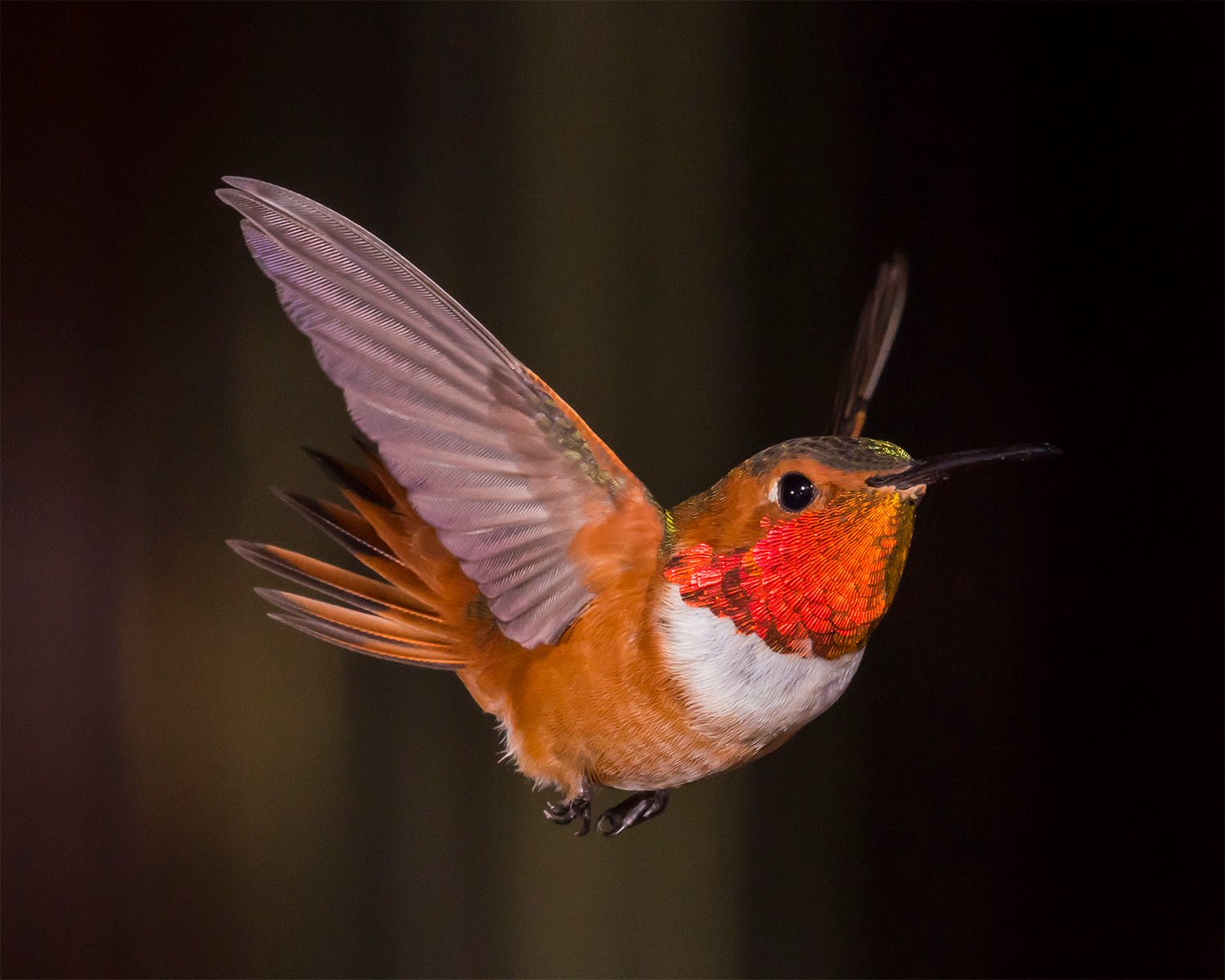
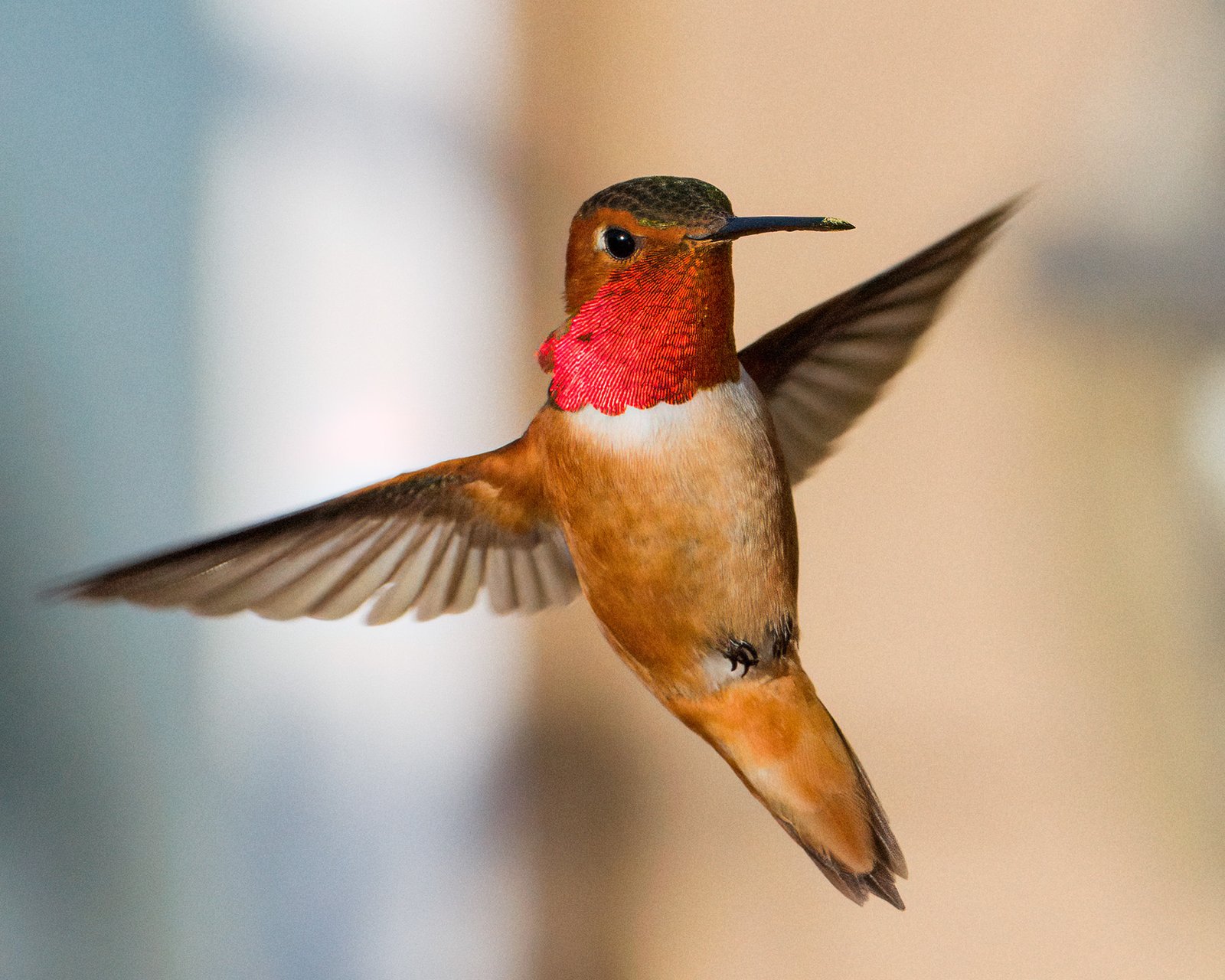
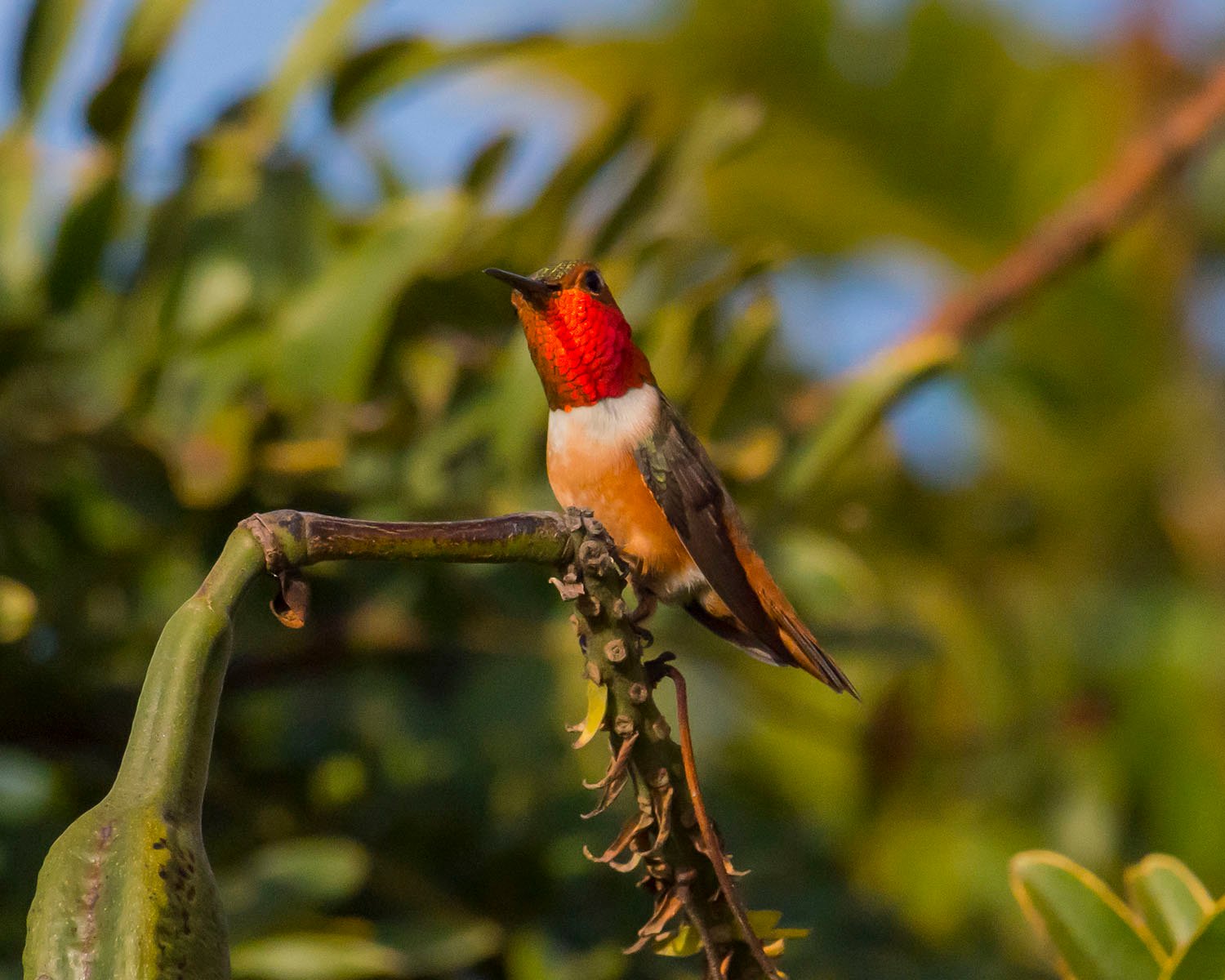
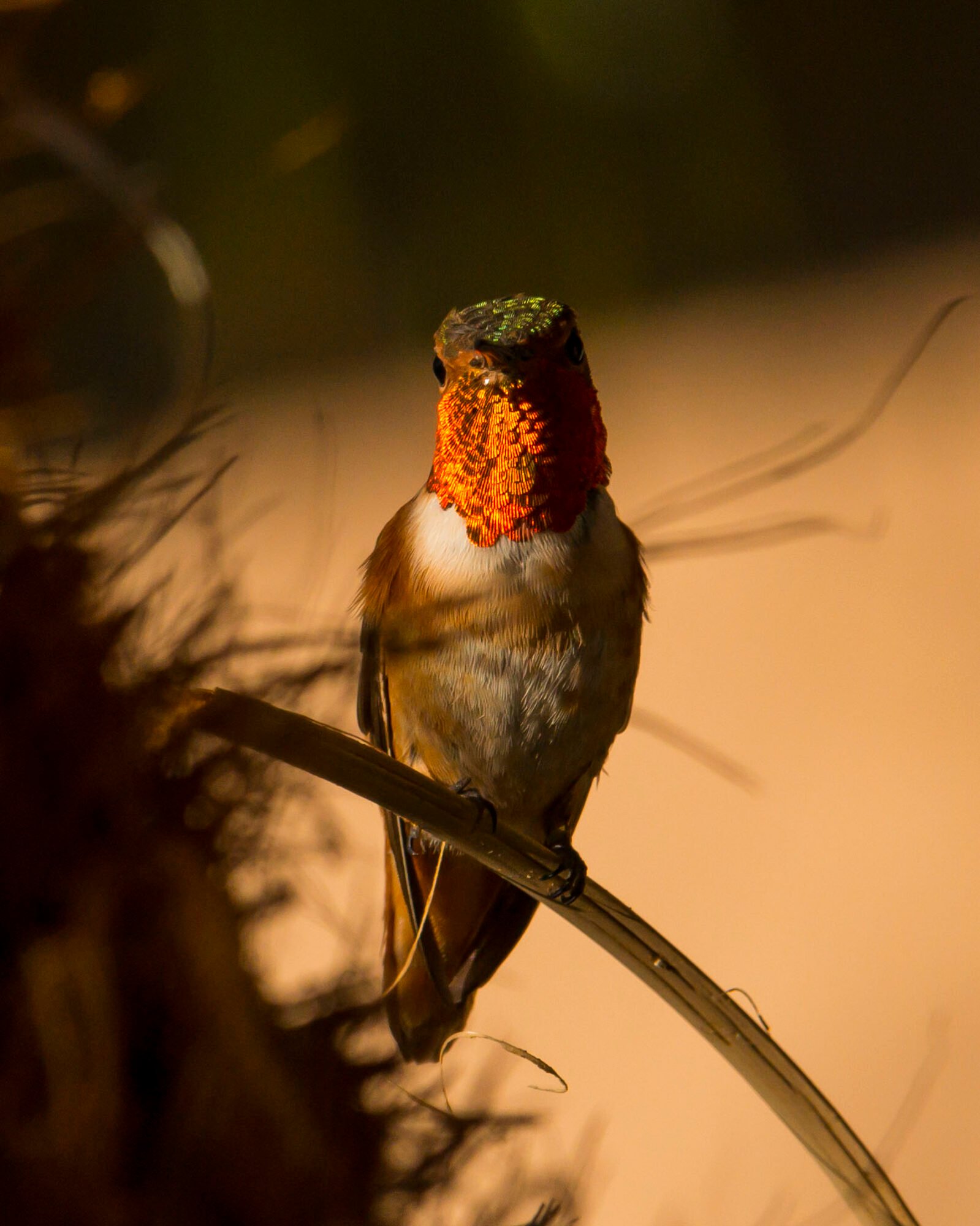
Allen’s Hummingbird is one of the signature hummingbirds of coastal California. Smaller than Anna’s, it averages about 3.5 inches in length and roughly 2 to 4 grams in weight. Males glow coppery orange and green, often appearing as if a sunset had somehow been fitted with wings. Allen’s breeds in coastal scrub, chaparral, and edge habitats along a narrow Pacific strip, and in parts of Southern California many are year-round residents. Males display in side-to-side shuttles, pendulum flights, and steep dives from as much as about 100 feet.4
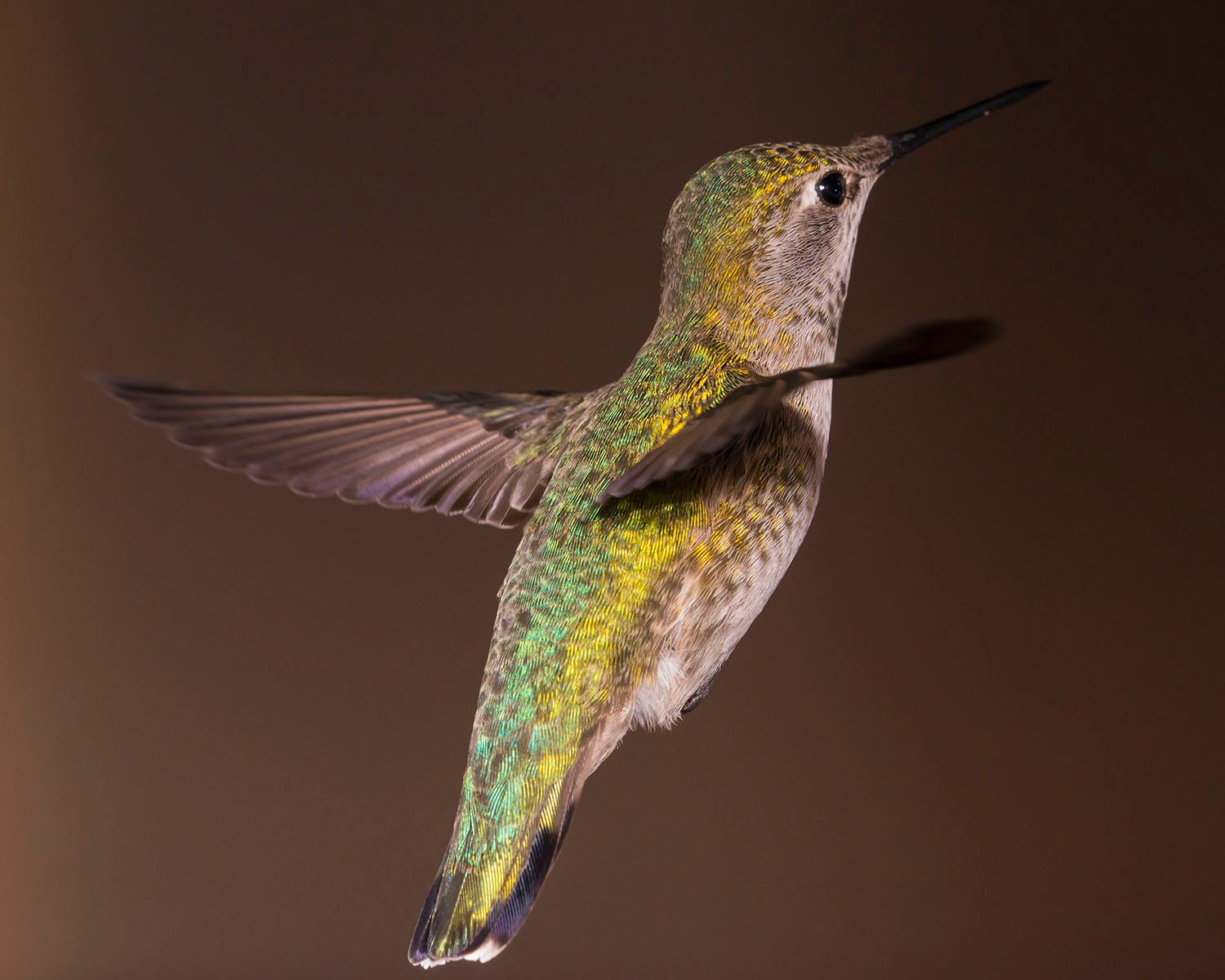
Costa’s Hummingbird is one of the lightest regular species in the region, typically weighing about 2 to 3 grams. The male’s purple gorget flares to the sides in a shape so dramatic it almost looks theatrical, as if the bird dressed itself for opera. Costa’s is strongly associated with desert scrub, but it also occurs in chaparral and sage scrub along the California coast. Males launch looping displays and broad U-shaped dives while giving a thin, high whistle.5
Black-chinned Hummingbird is about 3.5 inches long and weighs roughly 2.3 to 4.9 grams. Its beauty is subtler: green above, pale below, and on the male, a velvety dark throat with a narrow purple band visible only when the light hits just right. It is highly adaptable and can thrive in natural settings and urban landscapes alike, so long as there are trees, nectar flowers, and safe perches. Males may perform display or territorial dives from 66 to 100 feet.6
Rufous Hummingbird is the little firebrand of the group, about 2.8 to 3.5 inches long and roughly 2 to 5 grams in weight. Adult males can appear almost entirely orange in good light, while females and immatures show green above with rusty flanks and tail patches. Cornell notes that Rufous wingbeats have been measured at about 52 to 62 beats per second, and that their one-way migration can reach roughly 3,900 miles, making them one of the great long-distance travelers relative to body size.7 They may be tiny, but their attitude is not. Rufous Hummingbirds often arrive at a feeder looking as though they are prepared to challenge everyone, including the homeowner.
Backyard Acrobatics, Barely Contained Ego, and Why People Fall in Love With Them
Hummingbirds are often described as hovering jewels, which is fair, but incomplete. Hovering is only the beginning. They brake in midair, pivot on a dime, move backward, shoot vertically upward, and drop into steep dives with absurd precision. Anna’s males rise high and plummet. Allen’s males swing like pendulums. Costa’s males loop and whistle. Even outside formal courtship displays, everyday hummingbird life looks like aerial fencing conducted by birds that have skipped lunch and are in a terrible mood about it.2 3 4 5
That constant motion is part of the backyard obsession. So is the personality. Hummingbirds can be shy in the most hummingbird-like way possible: one sudden movement and they vanish as if personally offended. Yet they are also brazen enough to hover in front of a person’s face, inspect a shirt color, or scold an entire patio from a favorite twig. They are equal parts jewel, bouncer, and drama critic.
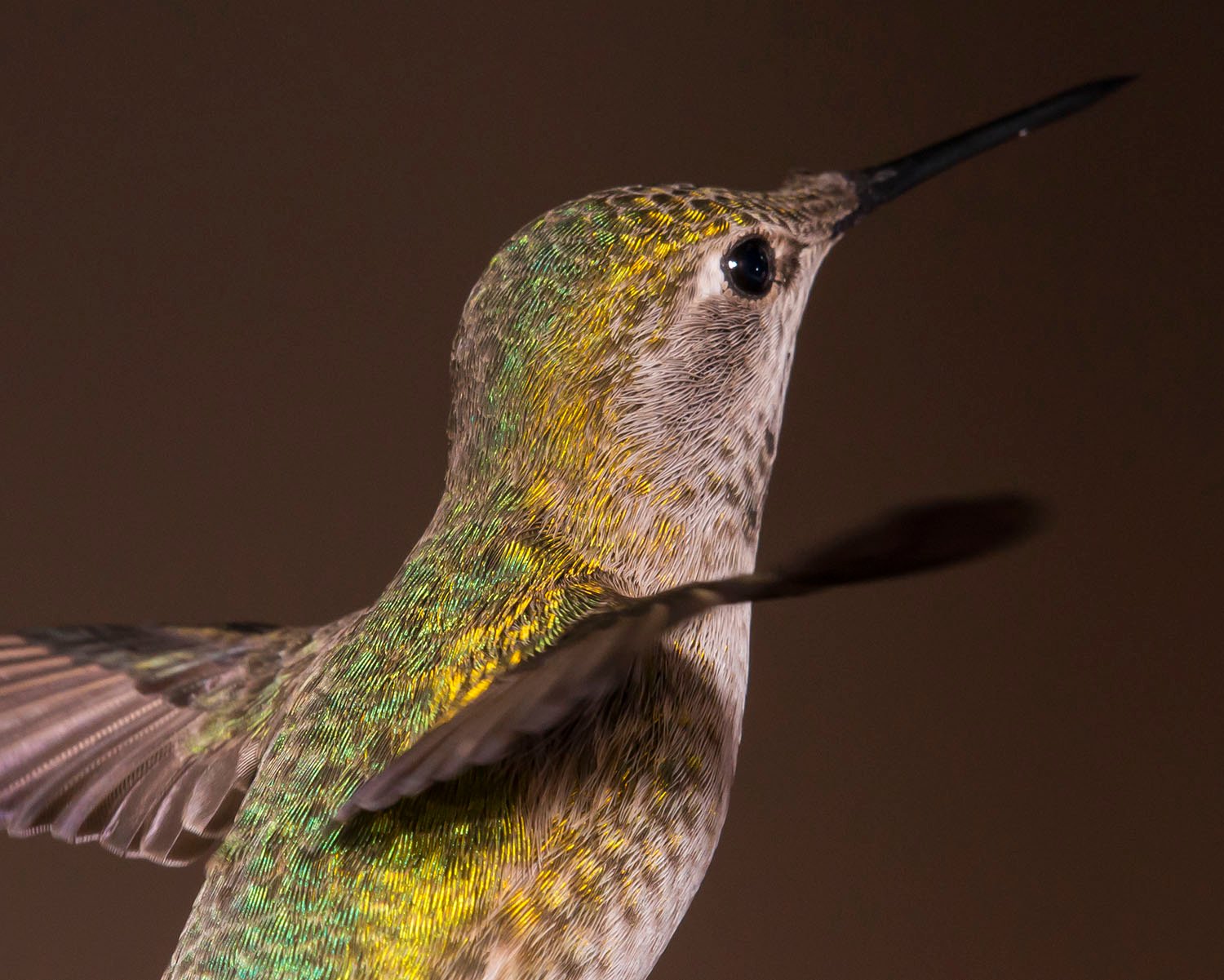
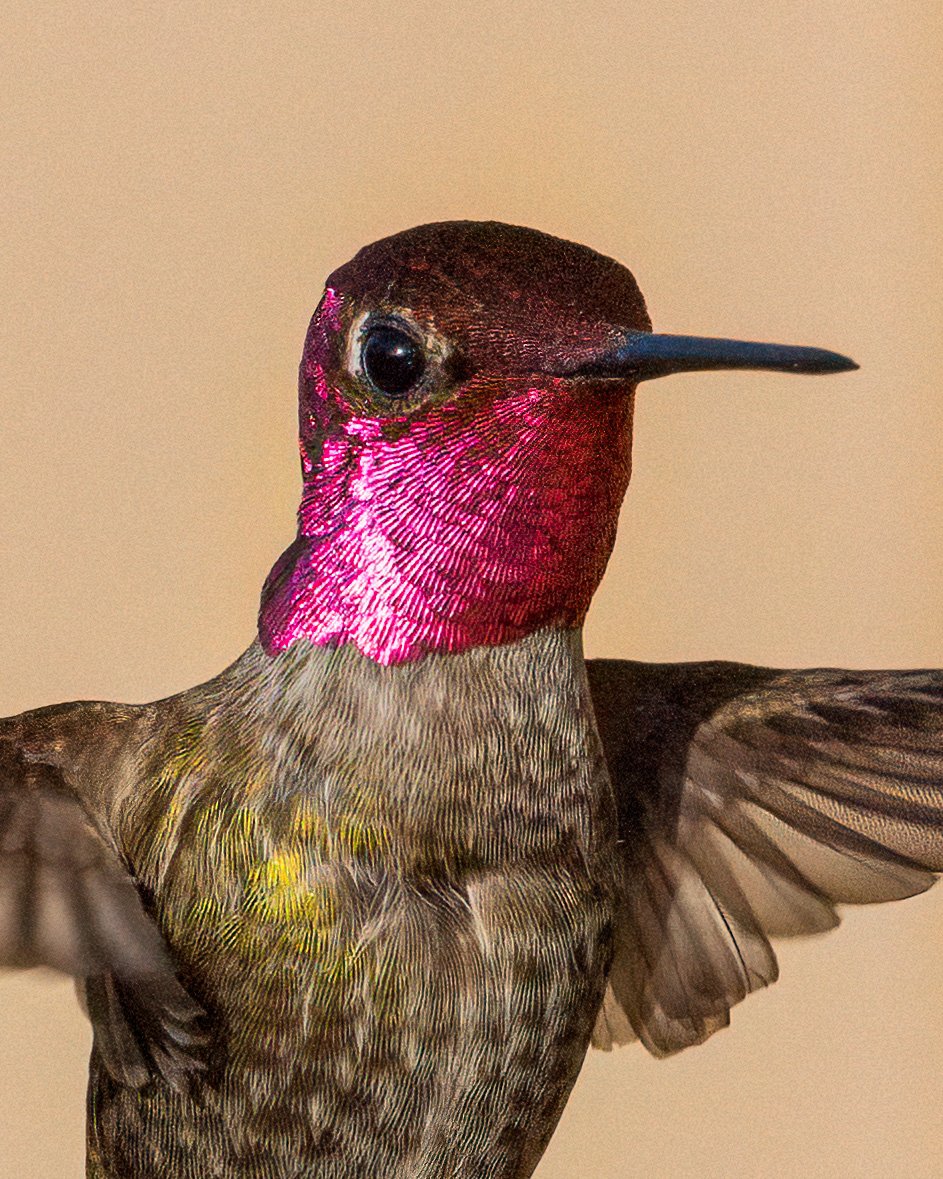
With patience, some birds even learn to accept a hand-held feeder. That does not happen because they become tame in any broad sense. It happens because a bird that already knows the yard may decide a still human with a familiar feeder is simply one more harmless piece of patio furniture. The trick, if there is one, is humility: stand still, hold the feeder quietly, keep your face and hands calm, and let the bird decide everything. Never grab, crowd, chase, or try to touch them. They may be tiny, but they have very strong opinions about personal space.
Why Hummingbirds Fight So Much
Hummingbirds are famously territorial because nectar is worth defending. Smithsonian notes that hummingbirds are generally unsociable, and that other hummingbirds are competitors for flowers that take time to refill. Cornell makes the same point from the feeder perspective: when one bird finds a concentrated source of calories, it may try to defend it aggressively, even if there appears to be more than enough to go around.2 8
This is why a single bird may try to command an entire multi-port feeder. To a human observer, the nectar seems abundant. To the hummingbird, it is one productive patch that might be stolen by rivals. The result is classic backyard drama: clicking, tail flaring, short bursts of pursuit, high-speed loops, and those little midair confrontations that somehow look both furious and adorable.
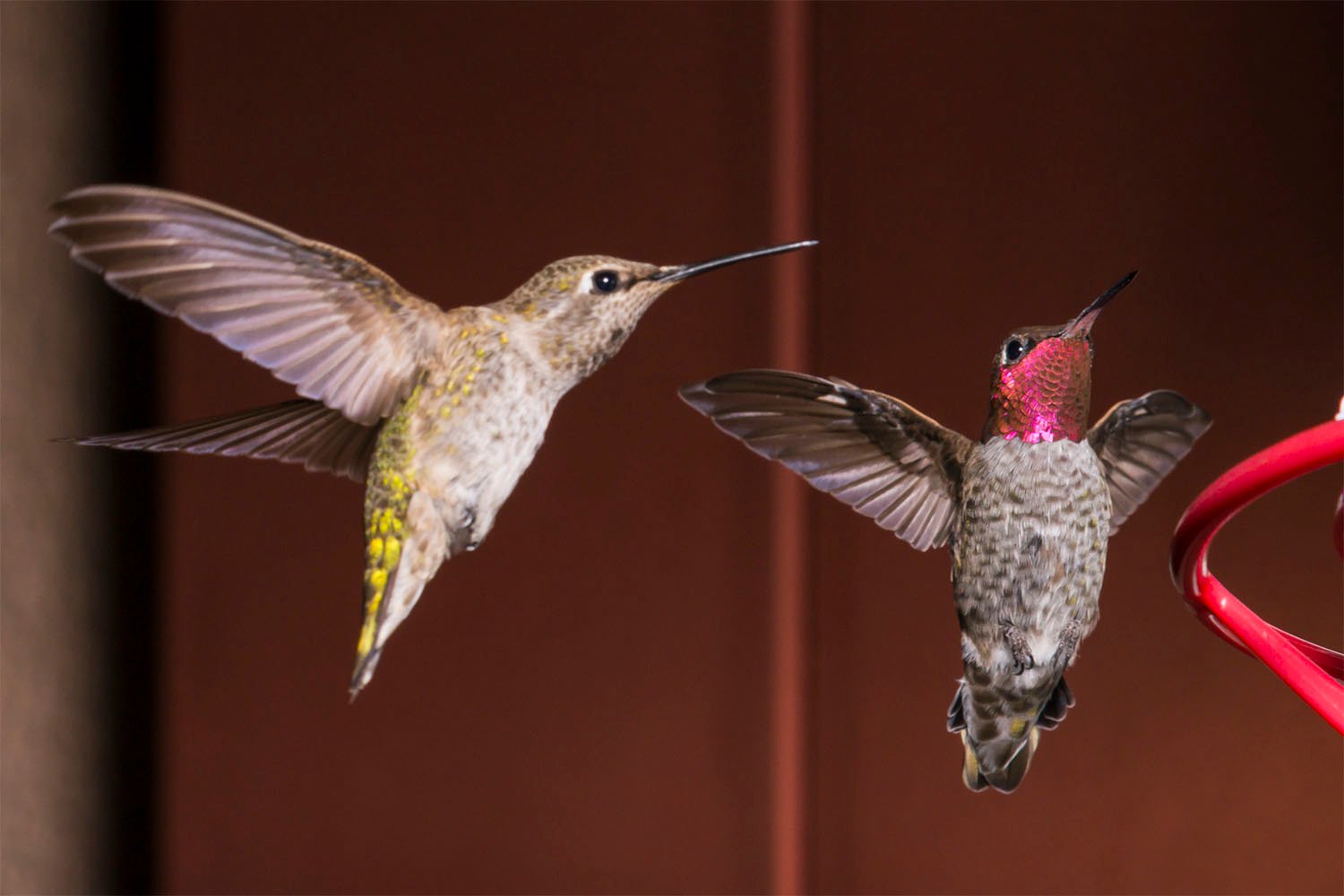
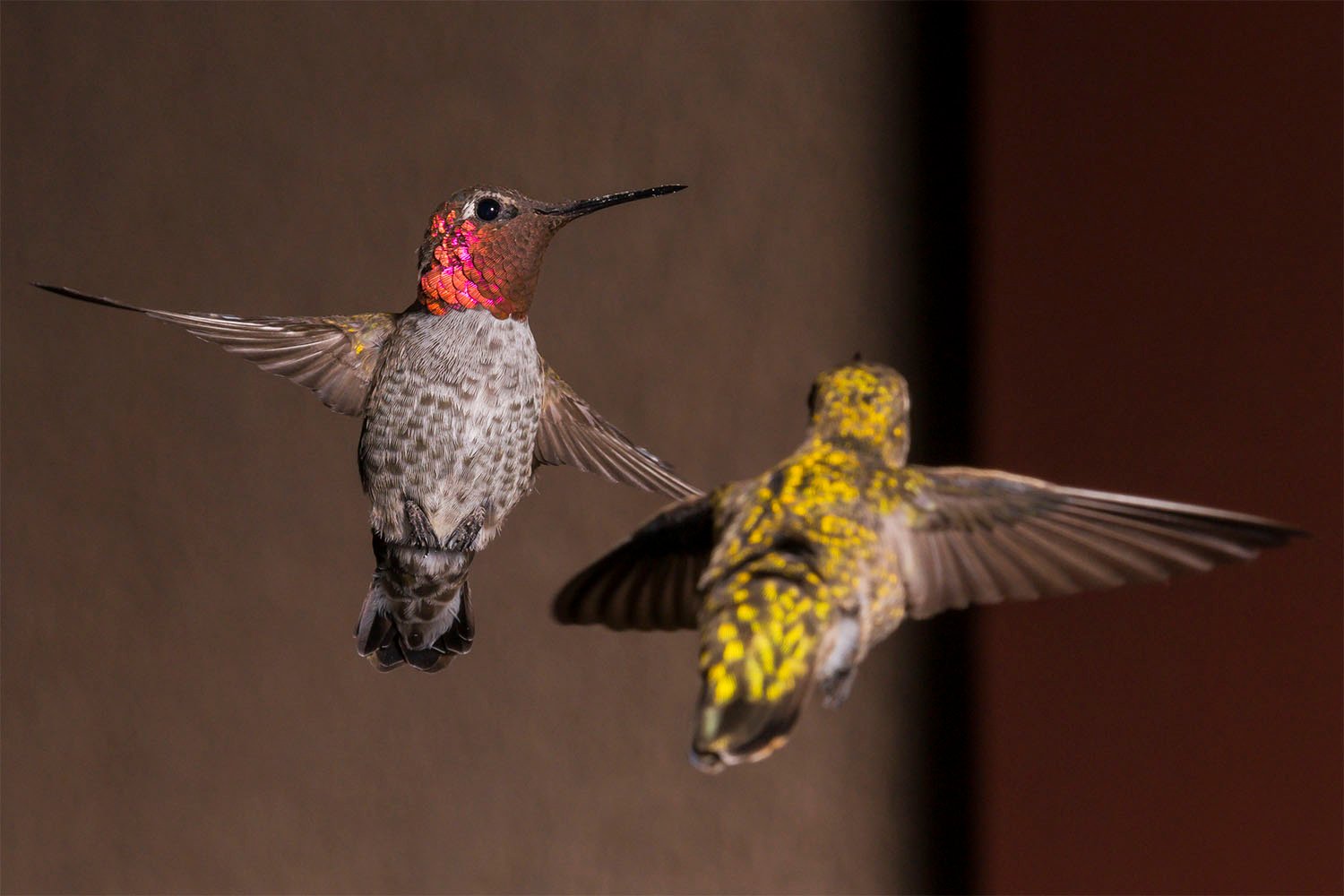
In some yards, one especially determined bird becomes the self-appointed security department. It will sit on a high perch, rush every approaching hummingbird, and spend so much time policing the feeder that it seems to burn nearly as many calories as it protects. Hummingbirds are not always efficient managers.
How to Reduce Territorial Disputes
The best way to reduce conflict is usually not one giant feeder. It is several small feeding stations placed where birds cannot easily see one another. Cornell specifically recommends multiple smaller feeders, and Audubon likewise advises hanging several feeders far enough apart that one dominant bird cannot control them all at once.8 10
In practice, that means placing feeders around corners, using shrubs or trellises as visual barriers, or hanging feeders on opposite sides of the house. It also helps to widen the food landscape. Native flowering plants should be grouped in more than one part of the yard, with species that bloom at different times so nectar is available over more of the year. The more the yard behaves like habitat instead of a single chokepoint, the less intense the competition tends to become.10
Each food source will, in time, have a “guard hummer” trying to protect it. The arguments will not vanish. That would be like asking hummingbirds to stop being hummingbirds. But it is often possible to turn total chaos into manageable chaos, which in a hummingbird yard counts as peace.
What to Feed Hummingbirds—and What Not to Feed Them
The safest hummingbird food is also the simplest: a sugar-water nectar made with refined white sugar and plain water. Audubon recommends a ratio of one part white sugar to four parts water, which is the same as 1/4 cup sugar to 1 cup water. It is also good to boil the water as this reduces bacteria in the water and helps dissolve the sugar quickly. Of course, let the feeder food get to room temperature before setting it out. This is the standard backyard recipe because it closely matches the sugar concentration hummingbirds commonly encounter in natural nectar.9
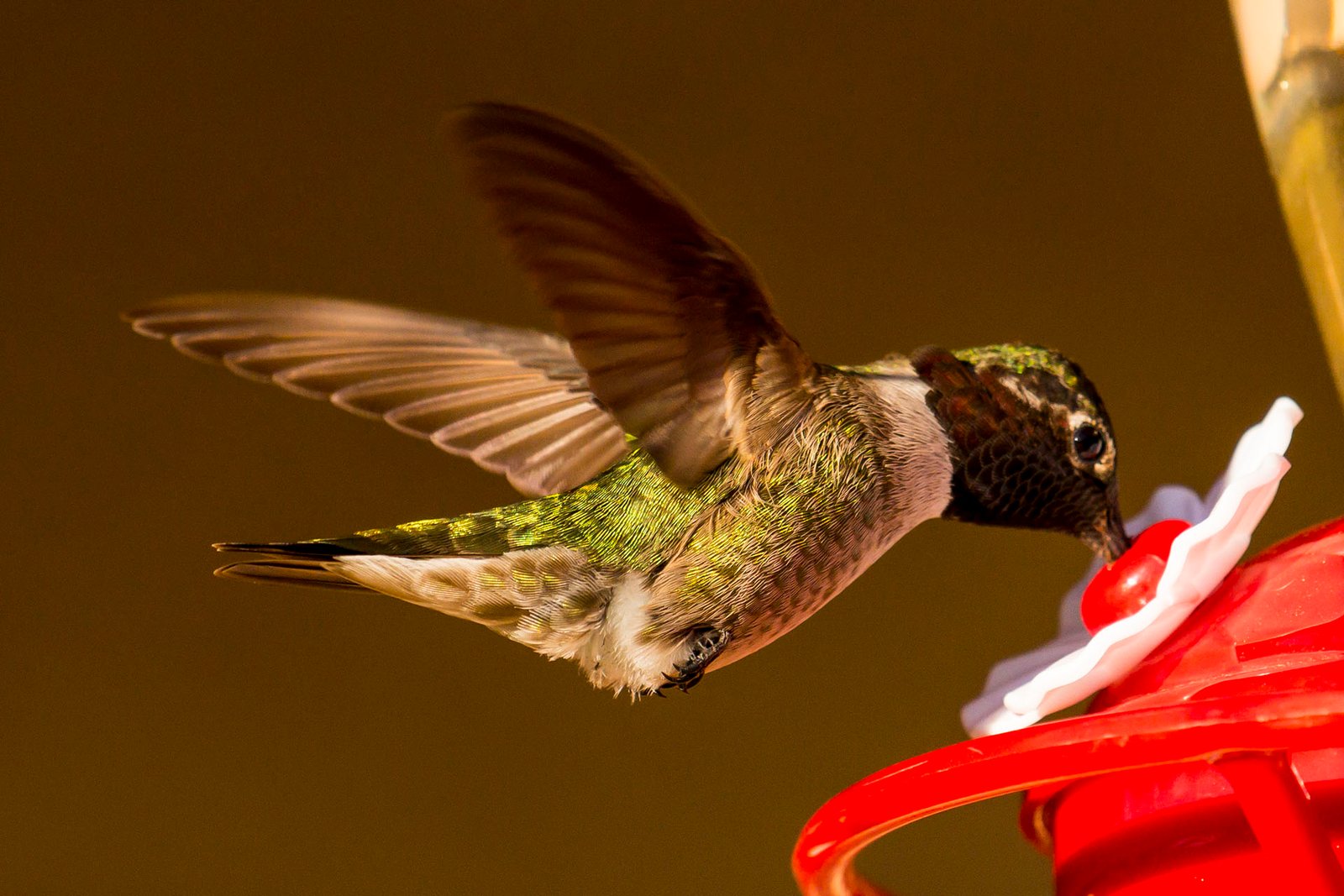
Do not use honey, brown sugar, molasses, raw sugar, or artificial sweeteners. Audubon and Cornell both warn against substitutes. Honey can promote dangerous fungal or bacterial growth, and alternative sweeteners contain compounds that are not appropriate for hummingbirds. Also, do not add red dye. Natural nectar is clear, and Audubon’s guidance is unusually blunt on this point: keep the nectar clear and skip the dye.9
If you want the birds to notice the feeder, let the feeder provide the color. Red or orange accents on the feeder itself are enough. The sugar water should look boring. In hummingbird care, boring is usually good.
How to Prepare Hummingbird Food Safely
The easiest safe method is this: bring water to a boil, stir in the white sugar until it dissolves completely, then let the mixture cool before filling the feeder. Audubon’s basic recipe is 1/4 cup refined white sugar in 1 cup boiling water, stirred until dissolved. Extra nectar can be refrigerated for later use, then brought back toward room temperature before refilling the feeder.9
Cornell adds a helpful nuance: if you are making only a small amount every day or two, boiling is not always necessary, but if you are making larger batches to refrigerate, using boiling water is wise. Either way, the sugar must dissolve fully, and the nectar must be cool before it goes outside.9
In practical terms, good hummingbird nectar preparation looks like this: use clean containers, dissolve the sugar completely, cool the solution, store extra nectar in the refrigerator, and never top off old nectar with new nectar. Dump the old batch, clean the feeder, and start fresh. Hummingbirds deserve better than yesterday’s mystery syrup. To minimize bacteria, regularly and thoroughly clean the feeder and remove any fungus, mold or contaminants. The feeder food (sugar water) goes bad quickly, so frequent cleaning and changes are in order.
Best Practices for Feeders: Clean, Shaded, and Easy to Scrub
Feeder design matters. Cornell recommends choosing feeders that are easy to take apart and easy to clean, because hummingbird nectar spoils quickly and any design with hidden crevices becomes harder to maintain properly. Saucer-style feeders can be useful because their feeding ports are on top and may be somewhat more resistant to bees and wasps than some bottle-style designs.9
Shade matters too. Audubon advises hanging feeders in the shade to slow fermentation. In hot weather, nectar can spoil quickly, especially along sun-baked walls or reflective patio surfaces. If the feeder is in bright sun most of the day, the nectar will need much more frequent attention.10
Cleaning matters most of all. Audubon recommends cleaning feeders every day or every other day in hot weather, every three days in temperate weather, and at least twice per week in cooler conditions. If the nectar looks cloudy, if mold appears, or if insects have gotten inside, clean the feeder immediately.9 Cornell likewise advises changing nectar every 3 to 5 days at minimum, and more often when temperatures exceed 90°F.9
For routine cleaning, hot water works well. Audubon notes that hydrogen peroxide or a weak vinegar solution can also be used, and cautions against dish soaps that may leave residue. Audubon’s yard guide suggests a weekly vinegar-water cleaning, and Cornell emphasizes taking feeders apart so every surface can actually be scrubbed.9 10
If bees, ants, or wasps become a problem, move the feeder before you reach for gimmicks. Cornell warns against oil or sticky substances around feeding ports because they can contaminate nectar or soil the birds’ feathers. Ant moats filled with water are far safer than greasy deterrents.9
Feeders Help, But Habitat Is Better
Even the best feeder should be seen as a supplement, not the whole menu. Audubon emphasizes that native flowering plants are the best nectar source overall, and that hummingbird-friendly yards should also provide insects, perches, nesting cover, and water.10 Hummingbirds need protein from insects and pollen, and nestlings depend especially heavily on arthropods. A hummingbird yard stripped of insects by pesticides may look tidy to us but function poorly for birds.10
A better yard includes bloom succession, safe open perches for territorial birds, protected hidden perches for roosting, shrubs or small trees for nesting cover, and a drip or fine misting water source. Hummingbirds often bathe in mist or droplets caught on leaves, which feels very on-brand for a bird that somehow manages to make even a bath look aerodynamic.10
The Sunset Rush and How Hummingbirds Sleep
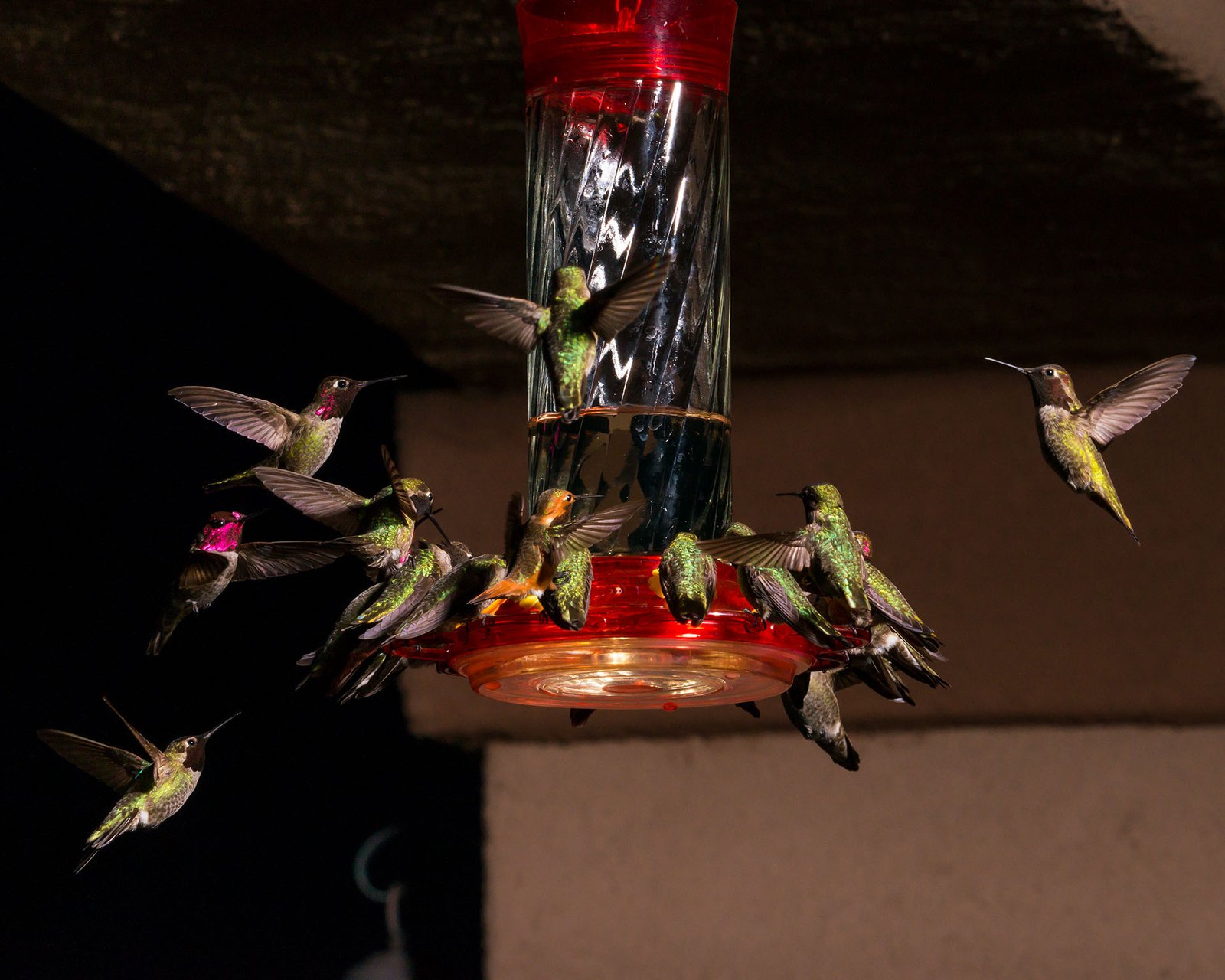
One of the most memorable hummingbird behaviors in a backyard often happens near dusk. Activity intensifies. More birds appear. The air seems suddenly busy with urgency. Birds that spent much of the day behaving like miniature aristocrats defending private estates may begin crowding the same feeder or flower patch with a little more tolerance than usual.
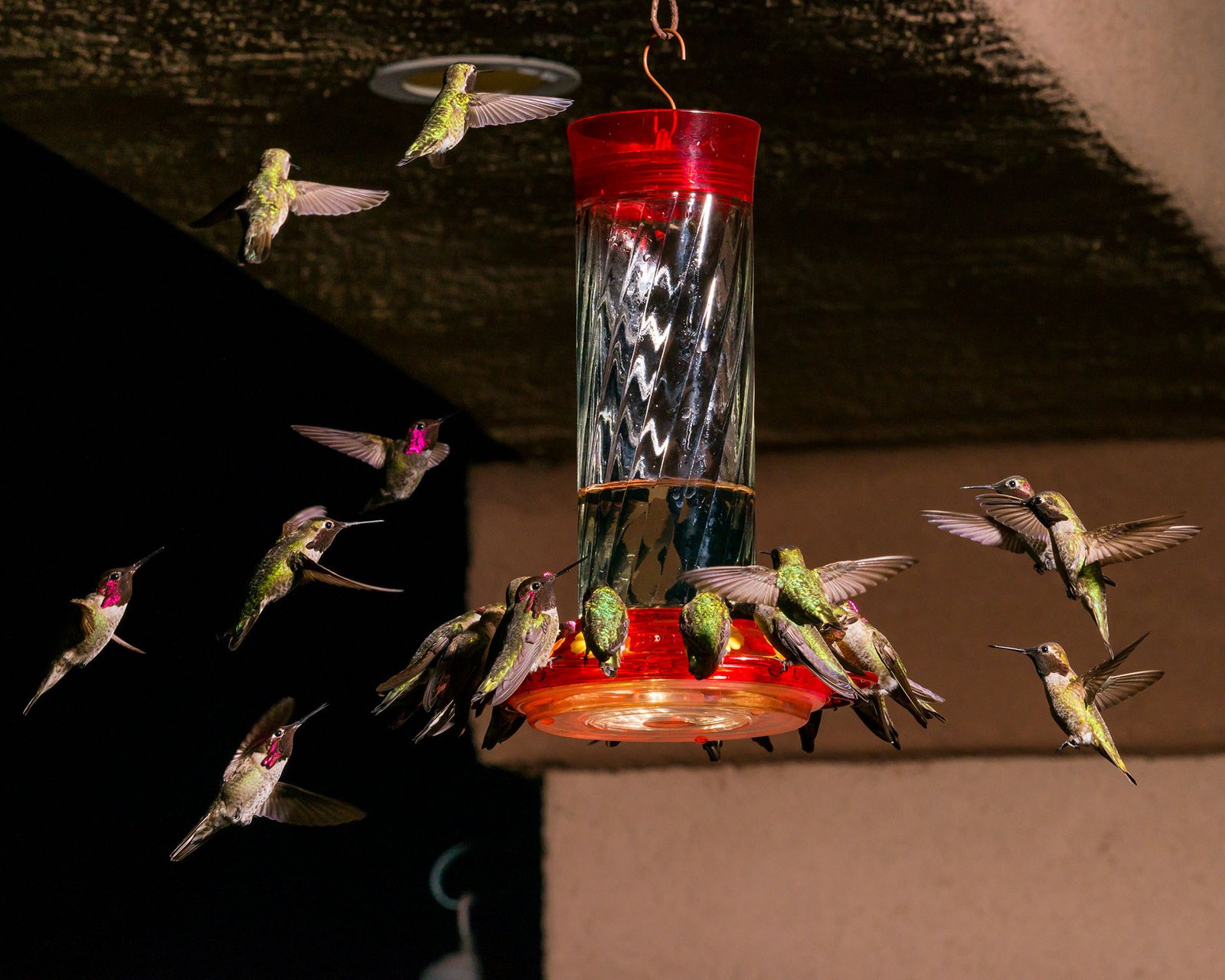
The safest way to understand that apparent change is not that they suddenly become sociable, but that night is coming and the metabolic stakes are rising. Smithsonian explains that hummingbirds can enter torpor, a very deep sleep-like state in which metabolism slows sharply and body temperature drops. Cornell reports that in shallow torpor a hummingbird’s body temperature may drop about 20 degrees Fahrenheit, and in deep torpor about 50 degrees below normal daytime levels.2 12
That helps explain the “last call” feeling at dusk. It is probably not friendliness so much as urgency. The night ahead is long, and a hummingbird heading toward torpor wants every final calorie it can get. To human eyes, it can look as though the territorial rules briefly soften. In reality, the birds may simply be reprioritizing.
For sleeping and roosting, hummingbirds need sheltered places protected from wind and temperature swings. Audubon recommends that a hummingbird-friendly yard provide both obvious open perches for daytime territorial birds and more protected spots hidden from view and buffered from cooler overnight conditions.10
Nesting: Tiny Cups, Stretchy Walls, and Solo Mothers
Hummingbird nests are among the most exquisite structures in the backyard. They are tiny cup nests woven from plant down, spider silk, and soft fibers, then often decorated with lichen or moss for camouflage. Spider silk is especially important because it allows the nest to stretch as the chicks grow. Audubon notes that hummingbirds often build these expandable nests on small horizontal surfaces near food and cover.10
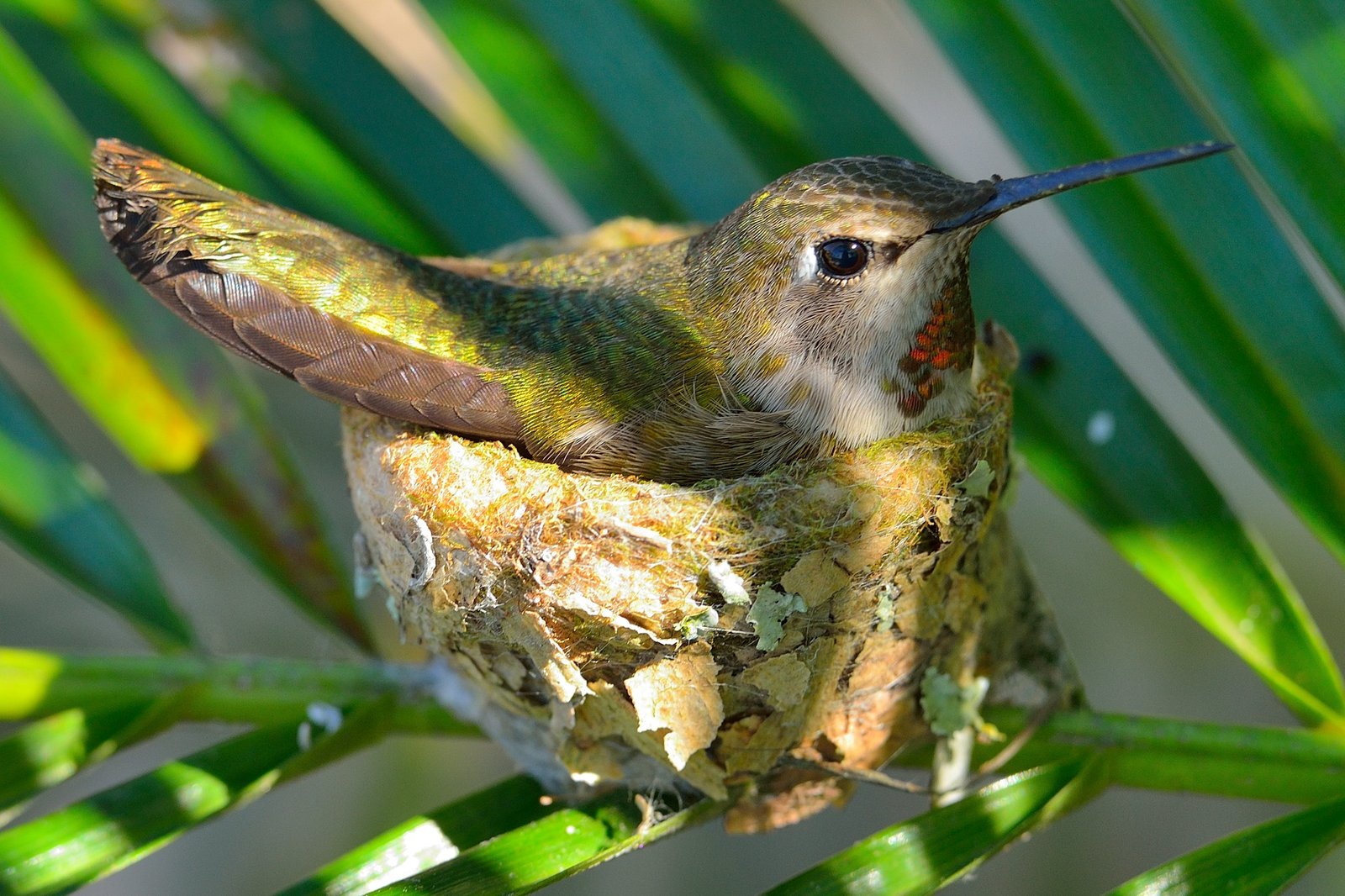
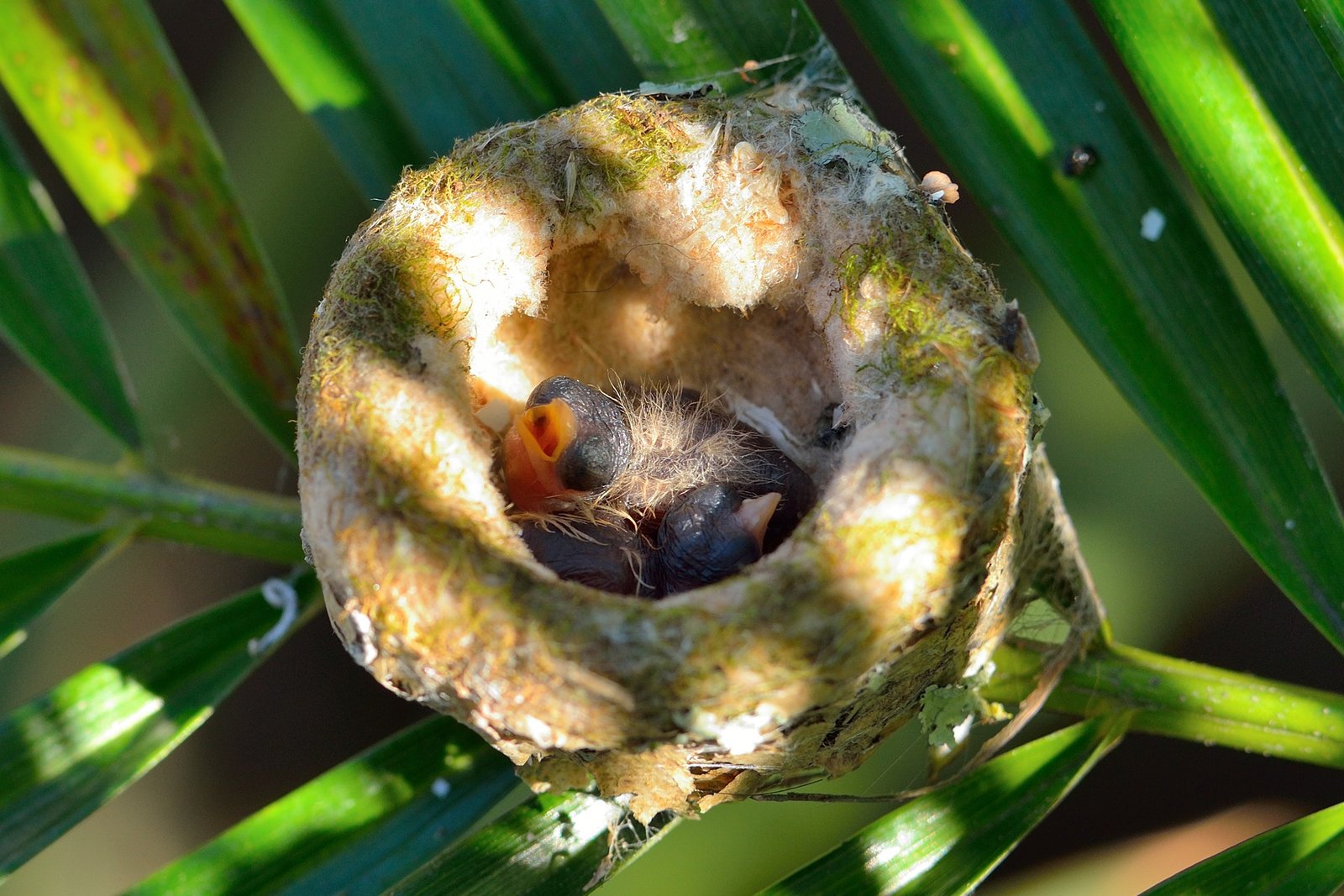
For Anna’s Hummingbird, the female usually places the nest on a horizontal branch in a tree or shrub, often about 6 to 20 feet above ground. Cornell reports that Anna’s nests are about 1 inch tall and 1.5 inches across, usually hold 2 eggs, and that females commonly raise 2 to 3 broods in a season. Incubation lasts about 16 days, and the young remain in the nest roughly 20 days before fledging.3
Allen’s Hummingbird females use spider silk, downy plant material, moss, and lichen, often placing nests from about 2 to 50 feet high. They may raise 1 to 3 broods. Incubation lasts about 17 to 22 days, and the young remain in the nest roughly 22 to 25 days.4
Costa’s Hummingbird females usually build a looser cup of bark strips, leaves, plant down, and spider silk, often just 3 to 7 feet off the ground. They generally raise 1 to 2 broods, incubate for about 15 to 18 days, and keep the chicks in the nest for about 20 to 30 days.5
Black-chinned Hummingbird females build a compact deep cup, often on a small horizontal dead branch. Their clutch is usually 2 eggs, they may raise 1 to 3 broods, incubation lasts about 12 to 16 days, and the nestling period is around 21 days.6
Rufous Hummingbird is less tied to coastal Southern California nesting than some of the other species because many local birds are migrants or winter visitors, but Cornell still gives a helpful sense of scale: the female builds alone, the clutch is usually 2 to 3 eggs, incubation lasts 15 to 17 days, and the chicks fledge in about 15 to 19 days.7
Across species, one nesting fact remains consistent and remarkable: the female builds the nest, incubates the eggs, broods the nestlings, and feeds the chicks alone. The males contribute color, courtship, drama, and occasional spectacular dives. The females do the real project management.2 3 4 5 6
Why They Stay With Us
What makes coastal Southern California hummingbirds so beloved is not merely that they are pretty. It is that they make a small space feel wild and vivid. They are half glitter, half attitude. They can be timid enough to vanish at a careless step, bold enough to inspect a person from a few feet away, and determined enough to treat a garden like a kingdom that must be defended at all costs.
They also teach attention. Once you start noticing the favored perch, the warning clicks, the female carrying nest material, the dominant bird on patrol, or the evening rush before darkness, it becomes very hard not to keep looking. That is the real backyard obsession. Hummingbirds turn routine into ritual. In coastal Southern California, they do it almost all year long.
Endnotes
- For the five hummingbird species most familiar in Southern California and for year-round regional occurrence of Anna’s, Allen’s, and Costa’s, see San Diego Zoo Wildlife Alliance, “Flights of Fancy,” and U.S. Forest Service, Maintaining and Improving Habitat for Hummingbirds in California.
- For general hummingbird physiology and behavior, including hovering, backward flight, brief upside-down flight, normal and dive speeds, heart rate, wingbeat frequency, torpor, and competition over nectar, see Smithsonian’s National Zoo, “Hummingbirds.”
- For Anna’s Hummingbird measurements, habitat, nest construction, clutch size, number of broods, incubation and nestling period, female-only parental care, and male courtship dive, see Cornell Lab of Ornithology, “Anna’s Hummingbird Overview,” “Anna’s Hummingbird Life History,” and “Anna’s Hummingbird Identification.”
- For Allen’s Hummingbird measurements, coastal breeding habitat, year-round residency around Los Angeles and the Channel Islands, nesting materials and timeline, broods, and display behavior, see Cornell Lab of Ornithology, “Allen’s Hummingbird Overview,” “Allen’s Hummingbird Life History,” and “Allen’s Hummingbird Identification.”
- For Costa’s Hummingbird weight, coastal California scrub habitat, nesting materials, broods, incubation and nestling period, and U-shaped display dives, see Cornell Lab of Ornithology, “Costa’s Hummingbird Overview,” “Costa’s Hummingbird Life History,” and “Costa’s Hummingbird Identification.”
- For Black-chinned Hummingbird measurements, habitat flexibility, nest placement and structure, brood data, and display dive range, see Cornell Lab of Ornithology, “Black-chinned Hummingbird Overview,” “Black-chinned Hummingbird Life History,” and “Black-chinned Hummingbird Identification.”
- For Rufous Hummingbird measurements, aggression, migration distance relative to body size, 52–62 wingbeats per second, and nesting data, see Cornell Lab of Ornithology, “Rufous Hummingbird Overview,” “Rufous Hummingbird Life History,” and “Rufous Hummingbird Identification.”
- For feeder aggression and the recommendation to use several smaller feeders spaced apart rather than one large feeder, see Cornell Lab of Ornithology, “Why Do Hummingbirds Fight So Much?” and Audubon, “How to Create a Hummingbird-Friendly Yard.”
- For the 1:4 sugar-water recipe, use of refined white sugar only, boiling or hot-water preparation, avoiding red dye and alternative sweeteners, refrigeration of extra nectar, feeder design and cleaning, and hot-weather nectar replacement guidance, see Audubon, “Hummingbird Feeding FAQs,” Audubon, “How to Make Hummingbird Nectar,” Audubon, “Are Hummingbirds Really Attracted to Red? And Is Dyeing Their Food Safe?,” Cornell Lab of Ornithology, “Feeding Hummingbirds,” and Cornell Lab of Ornithology, “You’re Seeing Fewer Hummingbirds at Your Feeder. Should You Worry?”
- For native plants, bloom succession, perches, nesting cover, insects as essential protein for adults and nestlings, pesticide avoidance, misting or drip water sources, feeder shade placement, multiple-feeder spacing, and cleaning guidance, see Audubon, “How to Create a Hummingbird-Friendly Yard.”
- For bird-safe window guidance, including the recommendation that markings on the outside of windows be spaced no more than 2 inches apart to protect even hummingbirds, see Cornell Lab of Ornithology, “Why Birds Hit Windows—and How You Can Help Prevent It.”
- For Cornell’s findings on shallow and deep torpor in hummingbirds, including body temperature reductions of roughly 20°F and 50°F below normal daytime levels, see Cornell University News, “Hummingbirds exert fine control over body heat.”
